Tuesday, July 20, 2010

Great teaser website for Poison Diaries

Here is a beautiful website promoting the new Harper Teen novel Poison Diaries, which goes on sale today.

Screenshot:


Found book review: King of the Screwups

I found this review on Twitter today. Though I follow her for her whit, I don't know who this ahillatwork person is, or even anything about the book she reviewed, but she seems to be in need of a blog to post on, so I thought I'd let her see what it would look like.

King of the Screw Ups: a Novel
by K.L.Going
Published by Harcourt
April 6, 2009

About 15 hours ago via the web

ahillatwork: So I'm gonna talk about books- specifically King of the Screwups for a second (I need to get a blog, man, this 140 is killing me).


Awesome: really nice, relatable main character- I have a thing for people who just want to do the right thing but can't seem quite to do it.


Awesome: Aunt Pete! Who loves music and doesn't make apologies or excuses for the way he lives. Also, Aunt Pete's friends were great.


Fairly awesome: The main character's relationship with his dad- the dad was almost TOO much of a bastard, but it worked most of the time...


Cont- mostly because of the way Liam's need for his father's approval was shown. Related: loved Liam as the unreliable narrator.


Less awesome: the mother's decision to step away from fashion was interesting & I liked the way it played out- but would have liked more


Also, would have liked more from the awesome outcast next-door-neighbor girl. I do appreciate, though.....


Cont. that the author did not make her the object of a big romance- more a source of approval & example (for Liam) of how to be smart.


What I really loved: King of the Screwups put me through an emotional wringer: I laughed! I cried! I connected with the characters!


In conclusion: I <3 unreliable narrators, YA is an excellent source for EMOTION, and I think & tweet too much about this.


Okay done now- going to crawl back under my desk and attempt to do expenses. Ugh. #no #dontwantto#needmorebooks #ugh

ahillatwork's day really took a turn for the worse after this posting, so hopefully this will either cheer her up, or at the very least, not upset her too badly. I've finally unpacked my books from my recent move and have some great new stuff to review, so hopefully you'll see me soon. 

Friday, March 12, 2010

Conflicts with Interest

Conflicts with Interest: a novel
by Michael Ruddy
Published by Rodeo Publishing
January 2010

I'm a big fan of small publishers, and was pleased to be introduced to Rodeo Publishing by the way of Conflicts with Interest, a gritty novel set in the tangled world of not-so-civil litigation.

T.R. Morgan and his son Ryan are about to find out how frustrating, and in their case dangerous, going up against the corrupt powers can be. As a recent visitor to the law profession, I appreciated the author's deliberate pace when it came to the lawsuit at the center of the story. That being said, this book keeps a fast-paced tempo, complete with all the vices.

Though I enjoyed this book, I probably won't hang on to this (rereading books is my highest praise) because I never made a good connection with the main character. Plus, my day job is at a law firm that actually handles similar litigation, so maybe this hit a little too close to home. Minus the body count.

Recommended for: anyone with a stake in homebuilding in California, fans of law-based fiction, suspense readers

Image credit: www.rodeopublishing.com

Wednesday, January 27, 2010

School's summer reading: a few quick reviews

The Bottom Billion: Why the Poorest Countries are Failing and What Can Be Done about It.
Collier, Paul.
Oxford, 2007

My favorite of the summer readings, and the only one I would go out of my way to suggest to anyone wanting a quick glimpse at the world of poverty. Collier clearly lays out how countries fall into four main traps (resource curse, landlocked, bad governance, conflict) that create a perfect political and economic environment for poverty to persist. Informative, great examples, well thought out: this was the first book I read for graduate school and it could only go downhill from there. It was like eating dessert first and then told I couldn't leave the table until I finished my cold, soggy peas.

The Responsibility to Protect: Ending Mass Atrocity Crimes Once and for All
Evans, Gareth.
Brookings, 2008.

I read it so you wouldn't have to. Gareth Evans worked on a paper/policy idea termed "Responsibility to Protect" or R2P, basically stating that all nations have the responsibility to protect their citizens from horrible things, and should a nation fail, the onus falls to the international community to step in. Great on paper, really hard to make a global policy. I just saved you hours of your life that could be better spent attempting to implement this idea than reading about one man's frustration.

A World of Nations: The International Order since 1945.
Keylor, William R.
Oxford, 2nd Edition. June 2008

This is a textbook. Handy if you want a quick description of any political conflict after WWII, not so much fun to read from cover to cover. I tried. I did. I kept falling asleep just after the Korean War. Keep it on your desk to reference when writing papers, but take a modern history course if you really want a knowledge base.

The Second World: Empires and Influence in the New World Order.
Khanna, Parag.
T Random House 2008

I'm pretty sure I liked this better than most of my classmates. Perhaps not as informative, and definitely more subjective than some of the other reading, but the "second world" countries are often overlooked in "pop" writing favor of the "third world." Unless you are an emerging economy or have a headline-making war/crazy leader/weather issues, the non-LDCs/non-OECDs are easy to miss. How often does one think, "I wonder how Kyrgyzstan is doing these days?" (The fact that Google Chrome just thought that Kyrgyzstan wasn't a word may be further proof). This book goes region by region, country by country updating the reader and pointing out what failures, opportunities and successes he thinks contributed to the current state of each.

The Accidental Guerrilla: Fighting Small Wars in the Midst of a Big One.
Kilkullen, David.
Oxford 2009

Great argument for counter-insurgency instead of counter-terrorism. Kilcullen takes a common sensical approach to modern warfare and how worse the situation becomes when the population of an invaded country isn't taken into account. They aren't fighting us because they want to destroy our country, they are fighting us because we are invading theirs. COIN ideas have been getting a lot more press now, so some of his writing may seem a bit obvious to those who have been paying attention. A quick guide to COIN is Kilcullen's "Twenty-Eight Articles" (click here to download the 11-page pdf). If you want more, his book is a good read that really fleshes out his ideas.

Wednesday, January 20, 2010

Squandered Victory


Squandered Victory: The American Occupation and the Bungled Effort to Bring Democracy to Iraq
By Larry Diamond
© Times Books 2005

For my "Middle Eastern Politics and Diplomacy" class I gave a presentation on Squandered Victory, a book focusing on our failed efforts in Iraq. I was tasked with answering two questions: why did we do so poorly and how could've we done better? Below is an outline of those answers. I encourage anyone to read this book if you want not only a look from outside the government at our goings-on with and in Iraq from 2001-2005, but also for Diamond's stories about his involvement as an academic advisor to the CPA.

I. Why did the US effort in Iraq fail?
1. We invaded in the first place
2. No plan before the war for turning power back over to the people
3. Designated Pentagon as lead agency in postwar reconstruction
a. First time since ww2 that state dep didn’t do transition
b. People chosen to deploy for rebuilding by General Garner were vetoed by the Pentagon as “soft”
c. Arrived with no Arabic speakers
d. Didn’t use exiled Iraqis input
4. Didn’t pay civil servants
5. Created colonial-like occupation
a. Redrew district boudaries
b. Announced we’d be out by August 2003
6. Lack of knowledge of customs
a. Refused to meet with religious leaders
b. Uninterested in Iraqi violence against other Iraqis
7. Formed the Coalition Provisional Authority (CPA)
a. Gave all power (executive, legislative, judicial) to adminstrator: Ambassador Paul Bremer
b. Made Iraqi got nevervous of occupation
c. Disbanded Iraqi army, banned Baath Party from gov employment
d. Appointed constitutional assembly, ignoring calls for an elected body
e. Refused to consider earlier elections
8. Insist on 180 days to produce and vote a provisional constitution in face of mountains of evidence against.
a. Preferred to preserve the timeline at the cost of governence
9. Constant refusal to engage with Ayatollah Sistani, Shiite religious leader
10. Slow on Washington side
11. Slow to react to Sadr’s Mahdi Army growing strength and attack
a. Dismissed as bandits

II. What would it have taken to succeed?
1. Understand that democracy only occurs in special environments
2. Understand history and political situation
3. Use one of the many transition plans constructed before invasion
4. Follow plans created after occupation
a. Train and assist transitional politics
5. Accept more help from non-US led organizations
6. Trust Iraq to self-govern
7. Put state dept in charge, bringing in experts earlier
8. Did I mention not go in the first place?
9. Insist on strong legislative branch to ensure legitimacy

Tuesday, January 19, 2010

The Host: A Novel


The Host: A Novel
By Stephanie Meyer
Published by Little, Brown and Company
May 2008

I began this post in November 2008, after finishing The Host for the second time. Something in it reflected whatever pain I was living through right then enough to leave me crying. I just read it a fourth time and it still moved me to tears, which may be praise enough.

Stephanie Meyer of Twilight fame came out with a novel for an older crowd and instead of vampires, we get aliens. In a twist on Invasion of the Body Snatchers, the Host looks at a post-invasion world through the eyes of a newly landed alien. When all goes according to plan, the aliens, or souls as they call themselves, happily inhabit a human's body (aka a host). However, when our protagonist (the Wanderer) is placed in her host, she finds that she isn't alone.


What happens next is a touching look at what it means to be human. Comparable perhaps to Edward E. Hale's The Man Without a Country, Meyer presents us with an introspective look at what we take for granted. A surprising shift from the teenage angst found in her earlier series, I look forward to more soulful writing like The Host.


Oh dear, no pun intended.

Monday, December 7, 2009

Wicked Plants: The Weed that Killed Lincoln's Mother & Other Botanical Atrocities

Wicked Plants: The Weed that Killed Lincoln's Mother & Other Botanical Atrocities
by Amy Stewart
Published by Algonquin Books
May 21, 2009

I had high hopes for this books as I am always looking for different ways NOT to die in nature. As it would happen, while it was a pretty book to look at with great illustrations (by Briony Morrow-Cribbs), I don't think that it is a practical guide to dangerous plants. The illustrations, for example, wouldn't help me differentiate the plants if I were out on a nature walk. Nor were the stories as fun as I had hoped. Though Lincoln's mother was undoubtedly killed by a villainous weed, her antidotes were more passing remarks than intriguing stories.  That being said, I'm still happy to own this book as it was an easy read and could help with dinner conversation some day.

For: trivia lovers
Not for: gardeners, cooks (don't want to give them any ideas)

Sunday, December 6, 2009

The Cat Owner's Manual: Operating Instructions, Troubleshooting Tips, and Advice on Lifetime Maintenance


The Cat Owner's Manual: Operating Instructions, Troubleshooting Tips, and Advice on Lifetime Maintenance
by Sam Stall
Published by Quirk Books
September 2, 2004

Though a little silly, I found this series of books to be extremely informative to first time pet owners, or just those considering getting a cat (or dog, see also: The Dog Owner's Manual: Operating Instructions, Troubleshooting Tips, and Advice on Lifetime Maintenance). Written as if explaining a new piece of technology or perhaps as an instruction booklet for a VCR, this fact-filled paperback lives up to its publisher's name of Quirk. While not an ideal gift for experienced pet owners, this book is a fun way to introduce these species to newbies (such as this blogger). The same publisher also has an owner's manual for babies that looks interesting while flipping through it, but I would recommend The Happiest Baby on the Block if you need a more serious approach to infant raising.

Sunday, July 5, 2009

Also on the reading list...

See today's NY Times review
THE MEDIA RELATIONS DEPARTMENT OF HIZBOLLAH WISHES YOU A HAPPY BIRTHDAY: Unexpected Encounters in the Changing Middle East by Neil MacFarquhar
  
And the required reading list for school:
Bacevich, Andrew J. The Limits of Power: The End of American Exceptionalism. Holt. 2008
 
Collier, Paul. The Bottom Billion: Why the Poorest Countries are Failing and What Can Be Done about It. Oxford, 2007
 
Duelfer, Charles. Hide and Seek: The Search for Truth in Iraq. Public Affairs, 2009.
 
Evans, Gareth.The Responsibility to Protect: Ending Mass Atrocity Crimes Once and for All Brookings, 2008.
 
Keylor, William R. A World of Nations: The International Order since 1945. Oxford, 2nd Edition. June 2008
 
Khanna, Parag. The Second World: Empires and Influence in the New World Order. Random House 2008
 
Kilkullen, David. The Accidental Guerrilla: Fighting Small Wars in the Midst of a Big One. Oxford 2009

Friday, June 26, 2009

Summer reading wish list

Overqualified

by Joey Comeau


The Man Who Loved Books too Much
By Allison Hoover Bartlett


Wicked Plants: the Weed That Killed Lincoln's Mother and Other Botanical Atrocities

By Amy Stewart (review to come)


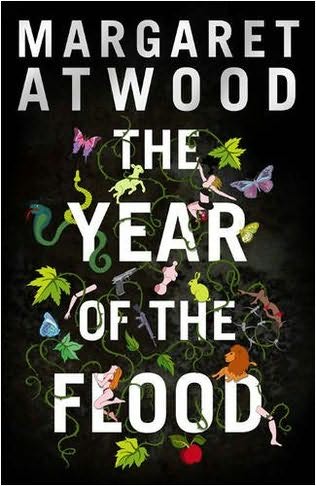
The Year of the Flood by Margaret Atwood


The Boy Who Harnessed the Wind by William Kamkwamba

Tuesday, June 2, 2009

Gods Behaving Badly

Gods Behaving Badly: A Novel 
by Marie Phillips
Publisher: Little, Brown and Company
December 2007

I've tried to make a point of only travelling with books that I haven't already read and this week I was pleasently surprised by this habit. gods behaving badly is an amusing update of the Greek gods as they attempt to survive in a world that no longer believes in them. The story is told mostly around the twins Apollo and Artimis and is set in modern-day London where the family of gods has lived since the time of the plauge. Their story also tangles with two mortals, Neil and Alice, who must be heroic in spite of themselves. 


This book will be fun for anyone who's a fan of Greek mythology, but those who aren't familiar shouldn't shy away as there is plenty of back story to catch you up.  Readers in search of another Odyssey will probably be disappointed, but those who are looking for a cute story should pick it up.

Wednesday, June 25, 2008

Interview with Carol Bodensteiner

Last month I had the opportunity to have coffee with Carol Bodensteiner and interview her for the bookstore's newsletter:

Carol Bodensteiner hails from Jackson County in the rolling hills of eastern Iowa and just wrapped up a semester as a visiting professor at Drake University. Growing Up Country: Memories of an Iowa Farm Girl is Carol’s first book and she recently finished working with the Department for the Blind to put her book on tape. “I'm very excited about that,” says Carol. “My mother had macular degeneration and I intended to read my book on tape for her. She died before I could get that done - in fact before my book was in printed form. So I wanted to do that as a memorial for her and others with macular degeneration.”

Though she spent most of her adult life in the public relations field, Carol has always been a writer. Since becoming an independent consultant in 1999 she has more time to focus on creative writing. The positive response Growing up Country surprised Carol as she wrote the book mostly for her family, especially her mother. “I love it that people like my book,” she said. “I don’t even know how to take that. As it turns out my book resonates with a lot of people.”

When she isn’t writing or teaching Carol can be found writing articles for the Iowan magazine, consulting on a public relations project and researching her next book. Carol is currently reading The Horizontal World and enjoys seeing how other people approach writing memoirs. Check out her website at www.carolbodensteiner.com for news on her next book and opportunities to meet Carol in person. Her next scheduled Des Moines visit will be at the Iowa State Fair in the Agriculture Building.

One of Carol's favorite quotations:
I write when I'm inspired, and see to it that I'm inspired at nine o'clock every morning. -Peter De Vries

Tuesday, June 24, 2008

Few new books but plenty of reading

The danger of working in a bookstore is that I bring home more books than I can possibly read. This was made obvious to me while attempting to pack all my books to get ready to move. Because of limited space I'm doing my best to pack only the essentials: classics, reference relevant to my field of study, a few favorite authors and cookbooks.
The rest of it -- advanced readers copies, fiction, lots of anthropology non-fiction, dictionaries, books in Spanish and young adult fiction-- I'm attempting to re-read before it gets left in boxes in a storage unit. This week the theme is "Books based on Pride and Prejudice:" The Second Mrs. Darcy, Darcy's Story and Mr. Darcy's Daughter. Usually I would pooh-pooh on books based on classic literature, but everyone has a weakness and mine is Mr. Fitzwilliam Darcy.

If you have never read P&P and have no intention of attempting a 19th century novel, I would suggest Pride, Prejudice and Jasmin Field by Melissa Nathan. Though it is nothing compared to the original story, this is chick-lit and fan-lit at its best.

For a lighter side of history, Harper Collins Publishing has a great line of fiction based on classic novels or historical events. Darcy's Story is one, P&P told from his point of view. There is also Thornfield Hall: Jane Eyre 's Hidden Story, The Family Fortune, based on Persuasion and a bunch of others. You can identify these books by a small green seal at the bottom right-hand corner of the cover:


It's summer. Go read something light.

Sunday, June 22, 2008

Walter Moers

As a follow up to City of Dreaming Books, I read Moers other books based on the fantasy continent of Zamonia: Rumo and The 13 1/2 Lives of Captain Bluebear. Both excellent books but they don't hold a candle to Dreaming Books. There is one customer at the store who I hooked on Moers who read them Bluebear first, then Rumo, and finally Dreaming Books and I think that might be the way to do it.
The 13 and 1/2 Lives of Captain Bluebear follows a blue bear named Bluebear (a couple waves named him, you'll have to forgive the lack of originality) through half of his lives. It's a great introduction to Zamonia because of the variety of creatures he meets and crazy places he travels. Bluebear is a likely hero and finds himself in life after life of dangerous situations. This book also offers an explanation of the scarcity of humans in Zamonia. If Dreaming Books is the dessert, Bluebear is the salad and appetizers.

Rumo & His Miraculous Adventures is Moers's best story of love and adventure. Rumo is a Wolperting, a species of dog known for its fighting skills and loyalty. He has a talking sword with a split-personality, befriends a sharkgrub (who is surprisingly moral in this book) and all his young life follows a silver thread in the sky. This book is truly the meat and potatoes of Moers's three Zamonia tales, right down to the violent, bloody fights and quests for true love. Rumo will be coming with me to Kentucky, just as soon as I can get it back from my friend who is hoarding it now.

When will Walter Moers have more Zamonia for his English readers? Can his other books possibly be as good as these??

Thursday, May 15, 2008

A Tomb on the Periphery


A Tomb on the Periphery
By John Domini
Published by Gival Press
May 2008

Don't Judge This Book By Its Cover.

John Domini's A Tomb on the Periphery is the second of a three-novel series set in post-earthquake Naples, Italy. The main character Fabbrizio, or Brizio for short, takes us on a wild ride through the grittier side of an already chaotic disaster area created Domini's first book in the series, Earthquake I.D. Though it is part of a series, A Tomb on the Periphery can be thoroughly enjoyed on its own.

As a result of the catastrophic earthquake, new archaeological ruins have been uncovered on the periphery of town. Known for being a guy who can get around law, Brizio finds himself tangled up with Shanti, an American with her eyes on a priceless artifact found among the tombs. Fabbrizio unknowingly forms a connection with the artifact and its previous owner, who is now reduced to a pile of bones in a duffel bag being shuffled all over the city. Danger looms from all sides as Brizio attempts to sort out the American, trouble at home, an illicit jewelery replication project and the ever present immigration issues.

Domini treats his readers to a feast of thugs, high-speed action, social commentary, humor and even a bit of romance in a well-packaged story. I found TOMB to be even more satisfying than Earthquake ID and hope the third and final book of the series will continue the trend of better and better.

Sunday, April 20, 2008

City of Dreaming Books

The City of Dreaming Books
by Walter Moers
Published by Overlook Press
September 2007
(hits paperback in August)

The City of Dreaming Books is my pick for "Best All-around Book of 2007." My usual description of it reads like something from William Goldman's The Princess Bride: "Fencing. Fighting. Torture. Poison. True love. Hate. Revenge. Giants. Hunters. Bad men. Good men. Beautifulest ladies. Snakes. Spiders. Beasts of all natures and descriptions. Pain. Death. Brave men. Coward men. Strongest men. Chases. Escapes. Lies. Truths. Passions. Miracles." Ok, there aren't beautiful ladies, and fencing is generally left out, but the rest stands true.

Don't be fooled, this is not a story for children. This is a book for people who love books. It is a fantasy set in the land of Zamonia and told to us by a young writer named Optimus Yarnspinner, a dinosaur who travels to Bookholm in search of the author of a manuscript left to him by his godfather. Bookholm is a city built on the book industry with thousands of bookstores and coffee shops, publishers everywhere, people reading on the streets and an underground labyrinth full of hidden libraries and the dangerous Shadow King.

Oh, and this books is beautiful. Walter Moers is a brilliant cartoonist as well as a fabulous writer. The words dance off the pages. This book is comparable to flourless chocolate cake: rich, smooth and goes wonderfully with strawberries. I have no higher praise.

Thursday, April 17, 2008

Truck: a love story

Truck: a love story
By Micheal Perry
Published by Harper Perennial
July 2007

Ever had a project you wanted to accomplish but lacked the tools or ability? Want to read a love story that has none of that gushy stuff? Read Truck: a love story by Michael Perry and you'll be more than satiated, not to mention laughing out loud every couple pages.

Perry is a journalist who has simple wants: to fix his truck, to not kill his garden and, though he may not have known it, to find a good woman. He is a man who takes pride in inventing the Unified Laundry System (just buy gray socks and wash everything together) and gets teary eyed at Funeral Blues by Auden (but then, who doesn't).

"Feel-good, laugh-out-loud read" and "A lovable love story"

Wednesday, April 16, 2008

Rabid: a Novel


Rabid: a Novel
By T. K. Kenyon
Published by Kunati Inc
April 2007

Fiction ripped from the headlines: child-molesting priests plus lethal viruses equals a creative thriller. T. K. Kenyon is a product of the University of Iowa's Writers Workshop with background in Biology; both of which came in useful in her first novel. She doesn't shy from graphic details of lab experiments combined with power gone wrong, nor does she hesitate to push the Catholic sex-scandal to its imaginative limits.

"Good writing" and "I'll have to pick this up again in six months" with a bonus "I look forward to her next project"

Tuesday, April 15, 2008

House of Leaves

House of Leaves
By Mark Z. Danielewski
Published by Pantheon Books
2000

Call it an experimental novel, call it a graphic post-postmodern attempt to recreate fiction, just be sure to call it good storytelling. In House of Leaves the story follows four story-lines in a delicate weaving of 1. a non-existing documentary 2. a criticism of said documentary 3. commentary on the criticism of the documentary and 4. edits on the commentary on the crit.. you get the idea. The book is fragmented yet whole because the stories, though they never really come together, manage to affect each other in a trickle down pattern.

Here is enough of the story to get you hooked: 1. There is a house owned by a photographer and his family that inexplicably changes in proportions (entirely on the inside without reflecting the changes on the outside). A door appears with a hallway that the photographer wants to explore. This hallway turns into a frightening series of shifting tunnels and rooms and crazy things happen. 2. This film is being criticized by an old blind man. BLIND MAN who thinks his apartment is shifting as well. He dies (naturally? creepily?) and his writings are found and put in order by 3. Johnny, a twenty-something loser who parties a lot. He comments both on the old man's work as well as his own doings (i.e. his crush on a stripper). Johnny starts going a little crazy. 4. There is a sweet index.

Do you really need to know anymore?

"Beautiful product" and "Dynamite storytelling" and "Sublime reading experience"

Monday, April 14, 2008

Devils in the Sugar Shop

Devils in the Sugar Shop
By Tim Schaffert
Published by Unbridled Books
May 2007

Though the author was entertaining at his signing event in Des Moines, the book's content made it difficult to hand-sell. I'm not a huge fan of books that try to put "fun" back into "dysfunctional." Comical at times, depressing at others, Devils in the Sugar Shop would be for a reader looking for an experience outside of mainstream-fiction.

"Different" and "Interesting"

What I'm reading/reviewing now:

Widget_logo